
It's Time for Some Equanimity
Last week was the fourth deepest market decline in a 48-hour period since 1950. As of this morning, the S&P500 is down about 19% from its high in February. There is a lot of uncertainty and fear out there, and I suspect there will be for some time.
We all know it’s wise to avoid panic-selling your investments. That's because it’s nearly impossible to successfully time both an exit from the market and a re-entry back into the market, which means that panic selling only locks in your long-term losses. The smart money holds firm in the face of declines and accepts the fear and uncertainty with equanimity.
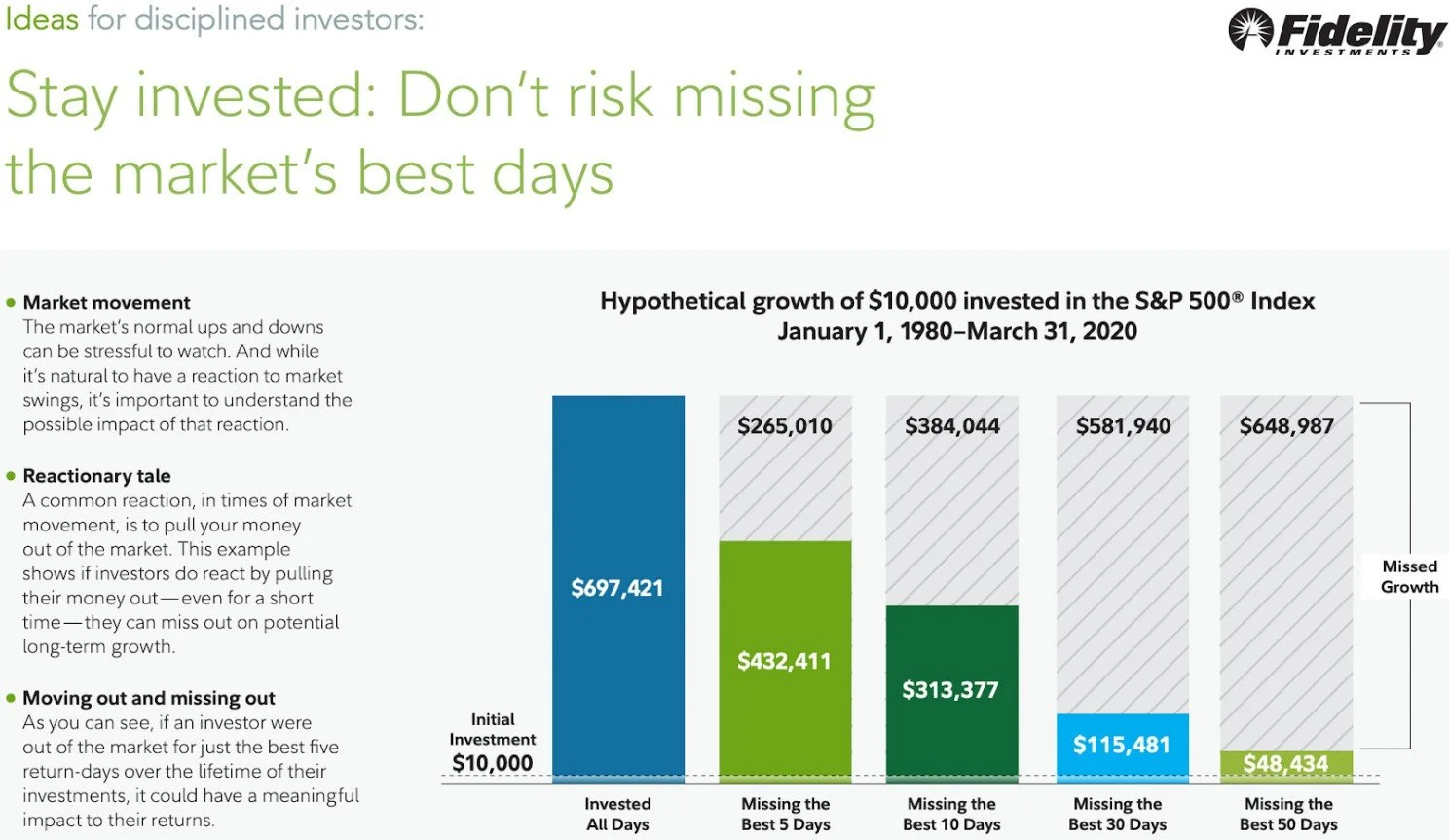
I’ve repeated John Bogle’s famous, tongue-in-cheek quote a lot lately. Speaking of market crashes, he said, “Don’t just do something; stand there!” I agree wholeheartedly. The evidence says panic-selling a retirement portfolio is a surefire way to get off track. But that doesn’t mean nobody should do anything. Two types of actions should continue happening (before, during, and after crashes).
Continue investing and rebalancing. Historically, these kinds of shocks present opportunities for investors who consistently rebalance, save and invest from each paycheck (aka “dollar-cost averaging”). Counterintuitively, over the long term, investors who rebalance and re-invest every month are better off with a more volatile market that incurs occasional deep drawdowns like last week than they are in a stable, continuously growing market! That’s because they’re occasionally given the golden opportunity to buy stocks on sale, which makes the average price paid over a lifetime lower than it would be otherwise.
Implement the Right Asset Allocation. Asset allocation is the mix of US stocks, international stocks, US bonds and international bonds in your portfolio. Hopefully, your asset allocation was prepared to handle this kind of shock. If so, congratulations! Holding a balanced portfolio over the last few years may have cost you slightly lower returns, but now you’re reaping the benefits and sleeping at night. However, not everyone did. Many were holding stocks that perhaps weren’t the right fit because they were growing so fast. I get it. If you’ve got a sub-optimal portfolio that is overly invested in stocks, now may be an opportune time to recalibrate. The whole market is down, which provides a window of opportunity to pivot into a well-fitted asset allocation without some of the capital gains taxes that might have previously made doing so difficult. Selling investments that have declined in value can create tax-loss harvesting opportunities. When repositioning during a downturn like this, you're selling at lower prices but also buying at lower prices. This can help reduce the overall impact of the transition.
What’s done is done, the market has dropped and may go further. But it's not too late to implement a proper allocation strategy that meets your long term goals. If you'd like to talk it over with someone, free of charge and with zero sales pressure (I mean that) then grab 30' on my calendar and let's talk.
https://calendly.com/phil-prosperowealth/discuss-asset-allocation
Disclaimer: The information provided in this blog post is for educational and informational purposes only and does not constitute specific financial, tax, or legal advice. All investing involves risk, including the potential loss of principal. Market data and statistics cited are believed to be accurate as of the date of publication, but are subject to change. Please consult with a qualified financial professional to discuss your individual circumstances and risk tolerance before making any investment decisions.