
Should We Reduce Our Bond Exposure?
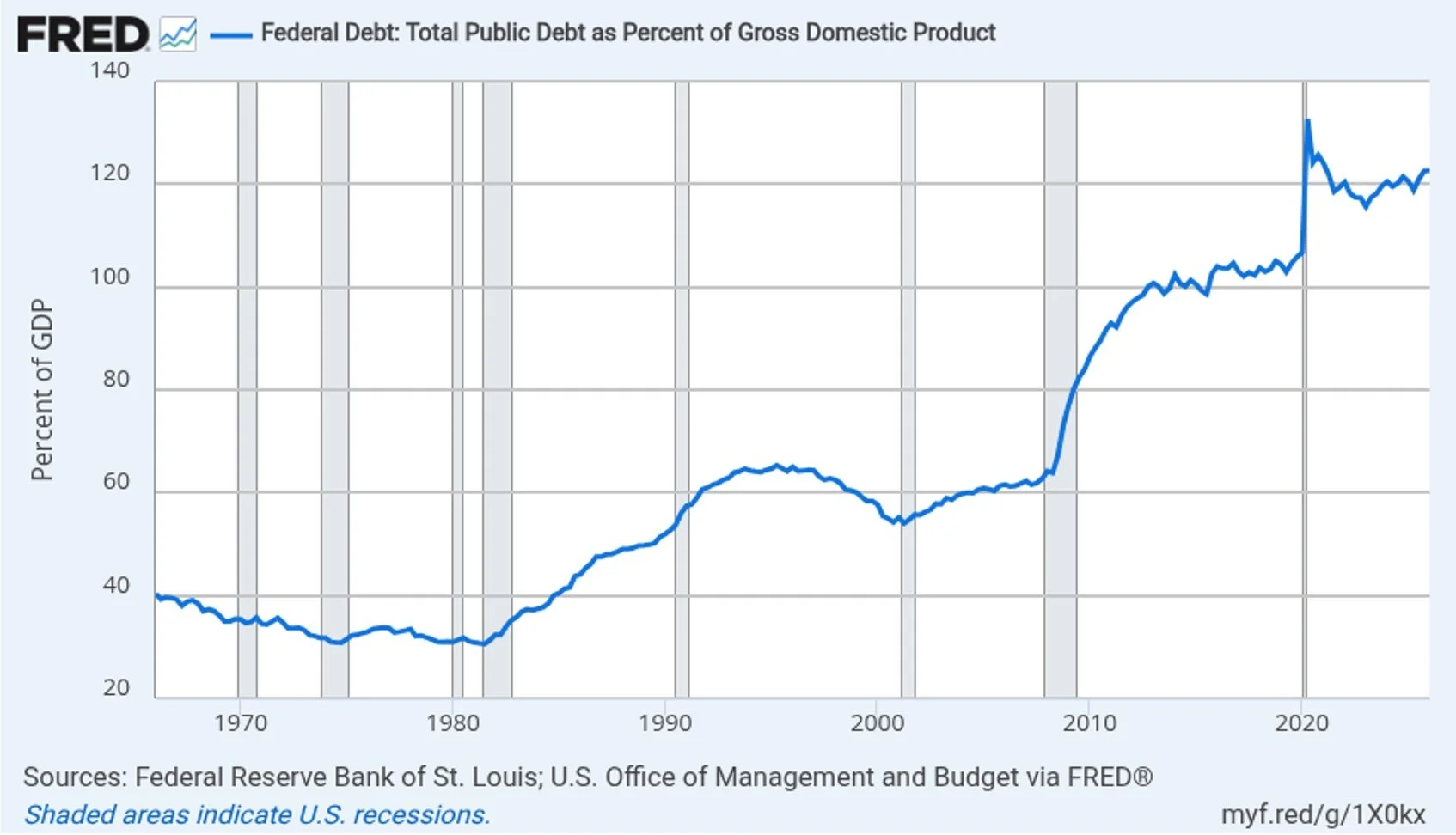
Source: Federal Reserve Bank of St. Louis https://fred.stlouisfed.org/series/gfdegdq188s#
I wrote about the bond market last week and wondered if falling bond prices might be due to systemic problems with the US taking on record amounts of debt. And if so... does that mean investors should reduce their portfolio's exposure to bonds? The US Debt is currently at about 122% of US GDP. If a household had that much consumer debt (not used to purchase an asset), I'd be pretty concerned. But it's not the same with a Government that repays its debt by collecting taxes.
I'm a big believer in the wisdom of the crowd. So what does the crowd's collective consensus say? Are the entities lending $billions to the U.S. government worried? The 5-year credit default swap (CDS) rate measures the cost of insuring against a U.S. government debt default. It's the most objective, market-driven global consensus on U.S. debt risk, and it shows that while concern is mildly elevated, it's nothing new or serious. It’s been hovering around 40-50 basis points for the last 3 years. See the chart below...
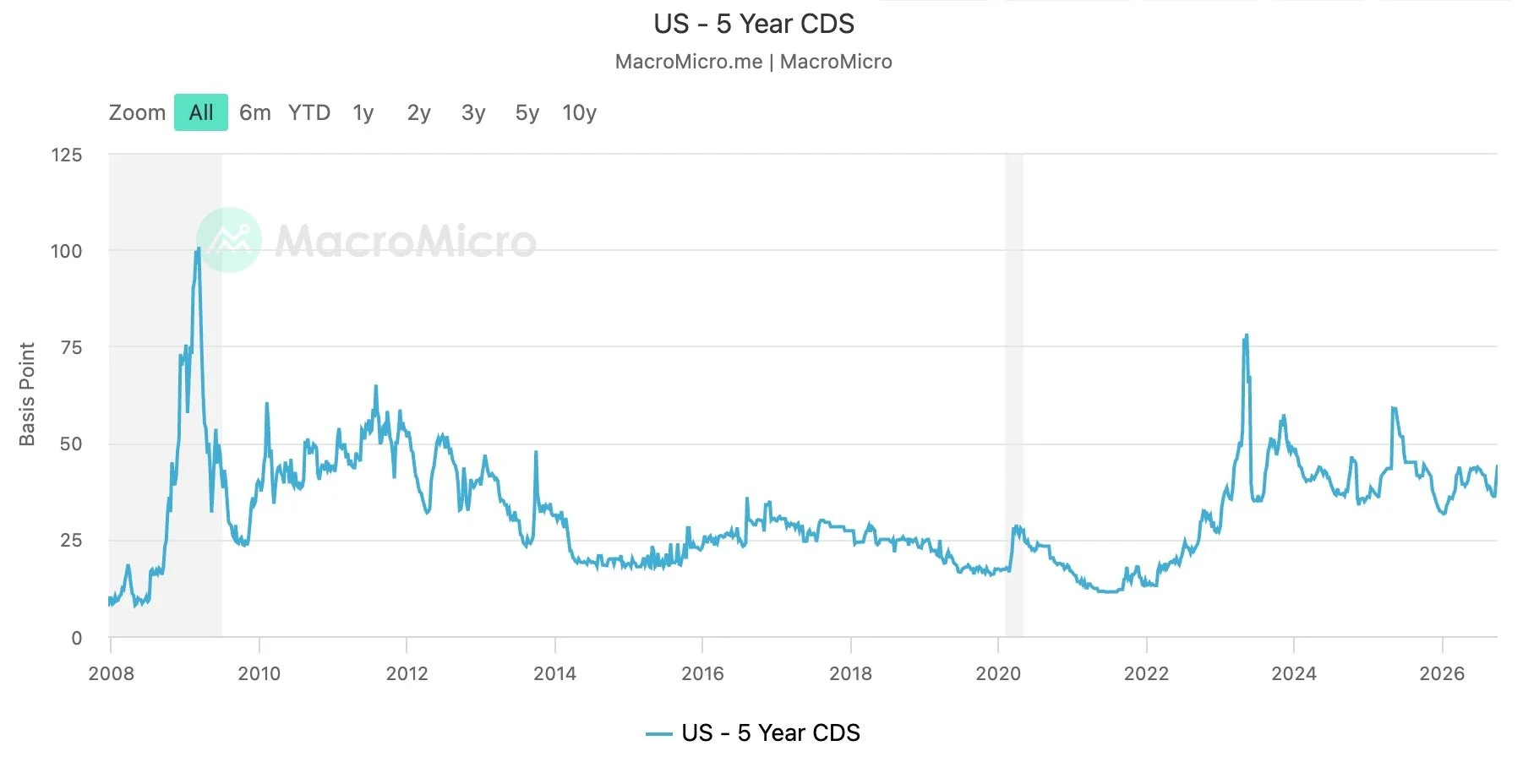
US Five Year Credit Default Swap Rates. Source: https://en.macromicro.me/charts/68239/us-5year-cds
My takeaway is that stock and bond prices already reflect expected debt levels and potential fallout, so this information doesn't mean investors necessarily need to change their asset allocations (i.e. reducing bond exposure). Unless major new developments arise, sticking to long-term asset allocation plans remains the smart move.